
Guide
Every Indus GG Panel Feature, Explained in One Place
The complete map: aim, visuals, sensitivity, skins, graphics and HUD, what each feature is for and who should care about it first.

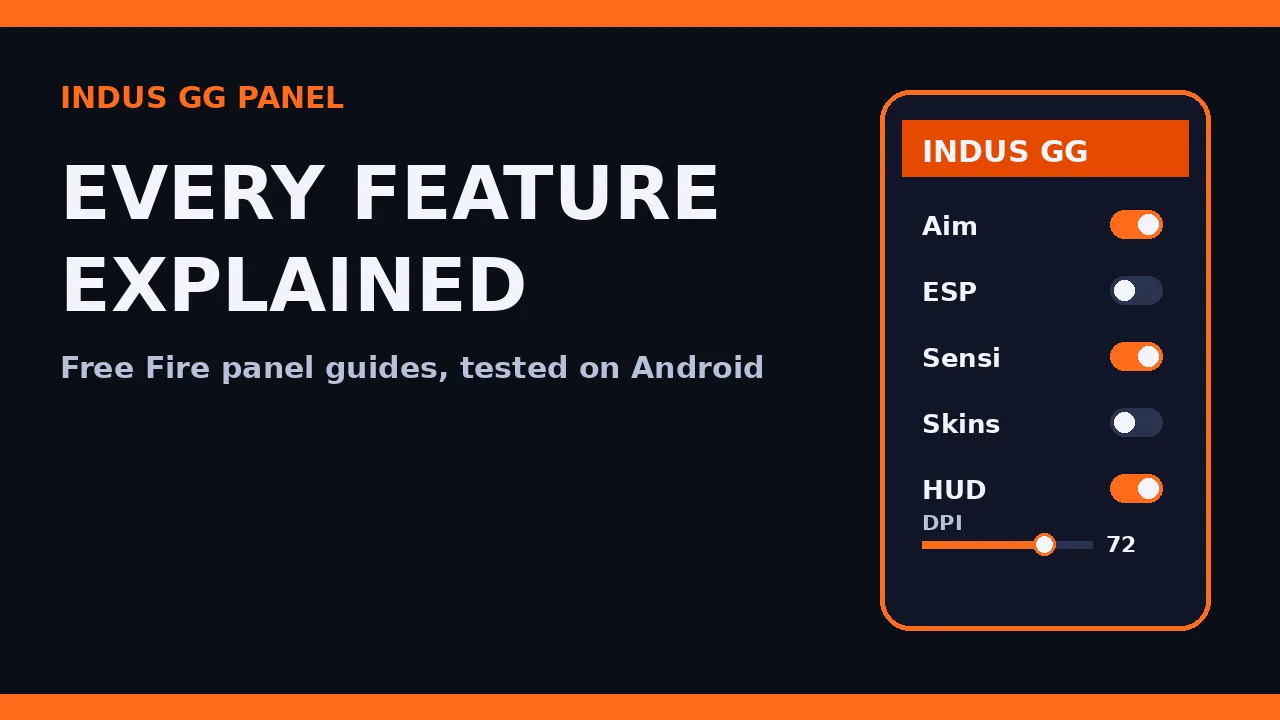
On this page
The complete map: aim, visuals, sensitivity, skins, graphics and HUD, what each feature is for and who should care about it first. Tested on a flagship, a mid range phone and a budget phone, and written up from Indus GG panel, here is the full picture.
Aim and information features
The aim menu holds assist, lock, scope aim, fire aim, head priority and the FOV slider: the features that shape how your input settles on target. The visual menu holds lines, boxes, names, distance tags and health bars: the features that shape what you know during a fight. New players should live in the aim menu first, because information only helps hands that can already act on it. the step by step install walkthrough is the aim deep dive.
Both menus reward restraint. Assist without sensitivity is jumpy, visuals without discipline are clutter, and the panel works best when each menu is tuned for your job in the squad rather than maxed because the switches exist.
The comfort features
The sensitivity studio, DPI pairing, graphics options, skin studio and HUD tools decide how the game feels across a long session: the sliders under your thumbs, the frames under everything, the layout your hands memorise. the sensitivity testing method starts that comfort work with the studio, and the fire button and HUD posts finish it.
Comfort features are where this app quietly wins its reputation. Fights are short; sessions are long, and the player whose setup still feels fresh in hour two outplays the player fighting their own controls. Build comfort deliberately and it compounds.
Who should care, in what order
Beginners: sensitivity studio, fire button, then aim basics. Intermediate players: FOV tuning, lean visuals, layout refinement. Advanced players: per game profiles, lab tested experiments, and the discipline of changing nothing without a counted reason. The download home for the panel itself is the Indus GG download page, and every post on this site hangs off the map you just read.
Quick Answers
Which feature should a beginner open first?
The sensitivity studio, then the fire button setup. Aim switches refine a profile; they cannot replace one.
What is the FOV slider for?
It sets how wide an area around your crosshair the aim assist behaviour covers. Wider feels eager; too wide feels jumpy.
Are the visual features useful for every role?
Each role uses a different lean subset. Rushers live on line and distance; snipers add box and health.
Where do I get the panel?
From the download page on this site, which always carries the current tested build.